
Last Updated: October 28, 2026
Quick Summary
The best fabric for non-shrinking graphic tees is a preshrunk, ring-spun cotton or a cotton blend, since fabric weight and fiber content together matter more than any single spec on the tag. Preshrunk cotton sets the minimum bar, ring-spun preshrunk cotton is the sweet spot for softness plus stability, and a cotton-poly blend resists shrinkage most at some cost to breathability.
- Preshrunk cotton is washed and dried under controlled conditions before cutting, so most shrinkage happens before sewing.
- Ring-spun cotton twists fibers tightly for a softer hand feel and better shape retention than open-end cotton.
- A common cotton-poly ratio is 60/40 or 50/50, with higher cotton favoring feel and higher polyester favoring stability.
- Wash graphic tees inside out in cold water on a gentle cycle, then air dry or tumble on low heat.
- Before buying, confirm fiber content, fabric weight, side seams, neckline construction, and care instructions.
Table of Contents
- Why Some Graphic Tees Shrink and Others Don't
- The Best Fabric for Non-Shrinking T-Shirts
- Signs of a High-Quality Graphic Tee Before You Buy
- How to Wash Graphic Tees to Prevent Shrinking
- Print Durability: The Problem Shrinkage Guides Ignore
- Fit, Sizing, and Everyday Comfort in Graphic Tees
- What to Check Before You Add a Graphic Tee to Your Cart
- Frequently Asked Questions
Why Some Graphic Tees Shrink and Others Don't
A cotton tee can come out of a hot dryer noticeably smaller and then relax again as you wear it, which tells you fiber content alone never guarantees a stable fit. That is the core problem behind the search for quality graphic tees that dont shrink. At Gilded & Gritty, we deliver premium, original graphic tees for everyday comfort and self-expression. Below, we break down what actually causes shrinkage, how to spot a tee that resists it, and how to wash the ones you own so they stay true to size.
Shrinkage starts in the fiber. Cotton fibers swell and contract when exposed to heat and agitation, and a hot dryer accelerates that process. A shirt that fits perfectly on day one can lose length and width within a few cycles if the fabric and construction aren't built to handle it. That's why the label matters less than the combination of fiber type, fabric weight, and construction details working together.
The Best Fabric for Non-Shrinking T-Shirts
The best fabric for non-shrinking t-shirts is a preshrunk, ring-spun cotton or a cotton blend. Fabric weight and fiber content together matter more than any single spec on the tag. But "preshrunk" and "blend" are not interchangeable, and the trade-offs between them decide how a tee feels, breathes, and holds its shape over months of wear.
Cotton, Blends, and What Fiber Content Actually Tells You
Pure cotton is comfortable and breathable, but it is not automatically shrink-proof. A graphic tee fit guide notes that pure cotton can shrink in a hot dryer and then relax with wear, so fiber content alone doesn't promise a stable fit. Preshrunk cotton reduces the risk, and a cotton-polyester blend adds dimensional stability because polyester resists the contraction that cotton undergoes. Ringspun cotton, meanwhile, feels softer and holds its shape better than standard open-end cotton because the fibers are twisted more tightly.
Preshrunk vs. Ring-Spun vs. Cotton-Poly: A Side-by-Side Comparison
These three fabric choices behave differently, and the right pick depends on whether you prioritize softness, breathability, durability, or maximum shrinkage resistance.
- Preshrunk cotton: Cotton that has been washed and dried under controlled conditions before cutting, so most of its initial shrinkage happens before the shirt is sewn. It feels like standard cotton, breathes well, and is the baseline for a tee that holds its size. The trade-off is that preshrinking reduces some of the fabric's natural softness, and very cheap preshrunk cotton can still shrink slightly on the first hot wash.
- Ring-spun cotton: Cotton fibers are twisted tightly into a fine, strong yarn, which produces a smoother, softer hand feel and better shape retention than open-end cotton. It breathes like cotton and drapes well, but it is not inherently shrink-proof unless it is also preshrunk. The trade-off is cost: ring-spun construction is slower to produce and usually commands a higher price.
- Cotton-polyester blend: Adding polyester gives the fabric dimensional stability because polyester fibers resist the swelling and contraction that cotton undergoes. Blends shrink less, dry faster, and resist wrinkling, but they breathe less than pure cotton and can feel slightly less soft against the skin. A common ratio is 60/40 or 50/50 cotton-poly, and higher cotton content favors feel while higher polyester content favors stability.
A practical way to think about it: preshrunk cotton is the minimum bar for a tee that holds its size, ring-spun preshrunk cotton is the sweet spot for softness plus stability, and a cotton-poly blend is the most shrink-resistant option at some cost to breathability.
Fabric Weight and Why 4.2 oz Matters
Fabric weight is measured in ounces per square yard, and it's the number most shoppers skip. A brand-published guide from Memento Clothing's 2026 durability guide treats 5.3 to 6.1 ounces as a durability benchmark for graphic tees, though that is the brand's own guidance rather than an independent standard. A 4.2 oz tee, like the Bella 3001 construction we use, sits at the lighter end. Heavier fabric resists stretching and wash wear better, but weight alone isn't a guarantee. For a deeper look at how fiber choice affects fit over time, see our guide on why fabric quality matters for graphic tees.
Signs of a High-Quality Graphic Tee Before You Buy
The clearest signs of a high-quality graphic tee are side seams, a reinforced neckline, tight stitching, and fabric that springs back when you stretch it.
Construction Details That Hold Their Shape
For a full checklist of quality signals, read how to tell high quality graphic tees.
Vintage Apple Club Organic Graphic T-Shirt →
How to Wash Graphic Tees to Prevent Shrinking
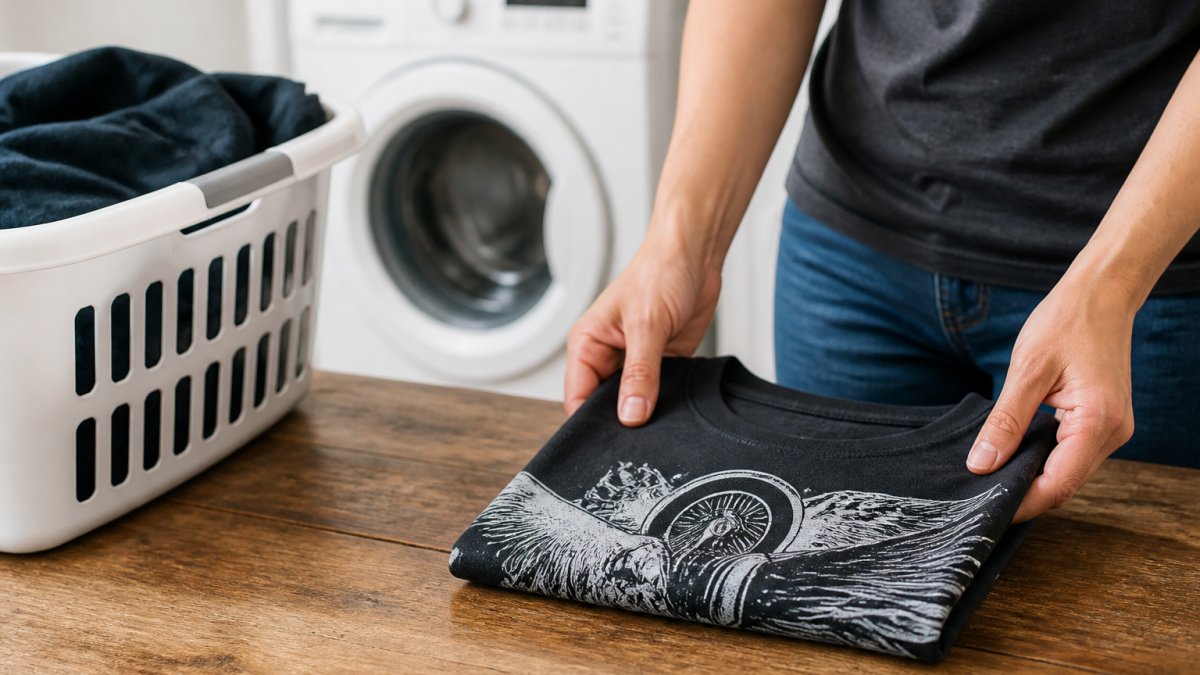
Wash graphic tees inside out in cold water on a gentle cycle, then air dry or tumble on low heat. Heat is the enemy of both fit and print, so cold water and low temperatures do most of the work. But "cold" and "low" are vague, and vague care advice is why so many tees still shrink. Here is what those settings actually mean and why each one matters.
Water Temperature: What "Cold" Actually Means
A common pattern is that a tee washed in hot water and dried on high can lose noticeable length within two or three cycles, while the same tee washed cold and air-dried holds its measurements far longer. The fiber mechanism is simple: cotton fibers absorb water, swell, and then contract as they dry under heat, and agitation compounds the effect. Cold water reduces the swelling; low drying heat reduces the contraction.
Dryer Settings and Air-Drying Trade-Offs
- Air-dry flat or line-dry: Best for fit and print. Reshape the shirt while damp and let it dry away from direct sun, which can fade dyes.
- Tumble low: Acceptable if you need speed. Remove the shirt while slightly damp and hang it to finish, which limits over-drying.
- Tumble high: Avoid. It is the fastest route to a shorter, wider tee and a cracked print.
Detergent, Load Size, and Agitation
For a full set of care rules that protect both fit and print, see our guide on how to prevent graphic tees from peeling.
Print Durability: The Problem Shrinkage Guides Ignore
A shirt can hold its shape while its graphic cracks, which means garment durability and print durability are two separate problems. Most shrinkage guides focus only on fit and ignore what happens to the design. Check both before you buy.
Fit, Sizing, and Everyday Comfort in Graphic Tees
A retail fit with unisex sizing gives you a shape for daily wear.
What to Check Before You Add a Graphic Tee to Your Cart
Before you buy, confirm five things: fiber content, fabric weight, side seams, neckline construction, and the care instructions. If a listing doesn't tell you any of these, that's a signal. Our Vintage Apple Club Organic Graphic T-Shirt shows what a transparent spec looks like: 100% Airlume combed and ring-spun cotton, 4.2 oz, side-seamed, unisex retail fit, tear-away label. For a broader buying framework, read are original graphic tees worth it.

| Check | What Good Looks Like | Why It Matters |
|---|---|---|
Frequently Asked Questions
Do 100% cotton shirts always shrink?
No, but pure cotton is the fiber most likely to shrink. INTO THE AM's 2026 guide notes that cotton can shrink in a hot dryer and then relax again with wear, so fiber content alone does not guarantee a stable fit.
How can you tell if a graphic tee is high quality?
Check four things. First, fabric weight: 5.3 to 6.1 ounces is the range one brand guide treats as a durability benchmark, though that is guidance rather than an independent standard. Second, seams: side-seamed construction holds shape better than tubular. Third, the print: a graphic that cracks while the shirt still fits means the decoration failed, not the garment. Fourth, the label and fiber details, which tell you whether the cotton is ring-spun and preshrunk.
What is the best way to wash graphic tees to prevent shrinking?
Wash cold, inside out, on a gentle cycle, and skip the high-heat dryer. Heat is the main driver of cotton contraction, so air drying or a low tumble does most of the work. Avoid overloading the machine, since agitation stresses seams and prints. If a graphic tee does come out tighter than expected, dampen it and reshape while it is still wet rather than reaching for more heat.
Why do some graphic tees shrink more than others?
Construction and fiber prep explain most of the difference. Lighter, loosely knit cotton moves more during washing, and untreated cotton has not been stabilized against heat. Blends with polyester resist contraction because the synthetic fiber does not absorb water the same way. Print method matters too: a heavy ink layer can stiffen a shirt and make any change in fit more noticeable, even when the fabric itself holds steady.
Shrinkage and print wear are fixable problems, but only if you know what to look for before you buy. Gilded & Gritty builds original graphic tees with premium fabric, side-seamed construction, and designs that hold up to everyday wear, so your shirt keeps its fit and its statement. Browse the collection and find a tee that's built to last. Get started with Gilded & Gritty and wear your story with confidence.


