

Table of Contents
- Why Graphic Tees Peeling Happens (And Why It's Not Your Fault)
- Prevention Before the First Wash: What to Check When Your Tee Arrives
- How to Wash Graphic Tees Without Cracking the Print
- How to Dry Graphic Tees So the Print Stays Put
- How to Fix Peeling Vinyl on a T-Shirt (Method-Specific Repairs)
- How to Stop T-Shirt Pilling: Fabric Care Beyond the Print
- Storage, Wear, and Everyday Habits That Keep Prints Intact
- Conclusion: Print Care Is Simple Once You Know What Causes Damage
- Frequently Asked Questions
Last Updated: October 16, 2026
Why Graphic Tees Peeling Happens (And Why It's Not Your Fault)
Learning how to prevent graphic tees from peeling starts with one uncomfortable truth: most peeling is caused by heat and friction, not by you doing something wrong.
Here is the short version. A printed design sits on top of fabric or bonds into it, and both bonds weaken when they get hot or rubbed. Dryers, hot water, and heavy loads do the damage. So the fix is simple: keep heat low and friction down.
That is the whole game.
Screen Print, Vinyl, and DTG: How Print Type Changes the Rules
Screen printing pushes thick ink through a mesh screen onto the fabric. It sits on top of the cotton and cracks when the shirt stretches or bakes in a dryer.
Heat-transfer vinyl is a plastic film pressed onto the shirt. It peels at the edges first, because the adhesive bond fails before the film itself does.
Direct-to-garment (DTG) sprays ink into the fabric fibers. It fades more than it peels, but harsh detergent still wears it down.
| Print Type | How It Fails | Main Threat | Care Priority |
|---|---|---|---|
| Screen print | Cracks in the ink | Heat and stretch | Low heat, inside out |
| Heat-transfer vinyl | Peels at edges | Heat and friction | Cool wash, no dryer |
| DTG | Fades and dulls | Harsh detergent | Mild soap, cold water |
Prevention Before the First Wash: What to Check When Your Tee Arrives
The first wash is where most prints get ruined. Prevention starts the day your tee shows up.
Check the care label before anything else. It tells you the fabric blend and the temperature the maker recommends. For a 100% Airlume combed and ring-spun cotton tee, cold water is always the safe call.
A few things to do right away:
- Read the care tag and note the max wash temperature
- Turn the shirt inside out before it ever hits the laundry basket
- Wash it alone or with like colors the first time
- Skip fabric softener, which coats the print and weakens the bond
How to Wash Graphic Tees Without Cracking the Print
Washing is where prints live or die. Get this routine right and most peeling never happens.
Cold water is non-negotiable. Heat softens the adhesive on vinyl and stresses screen-print ink. Cold keeps both stable.
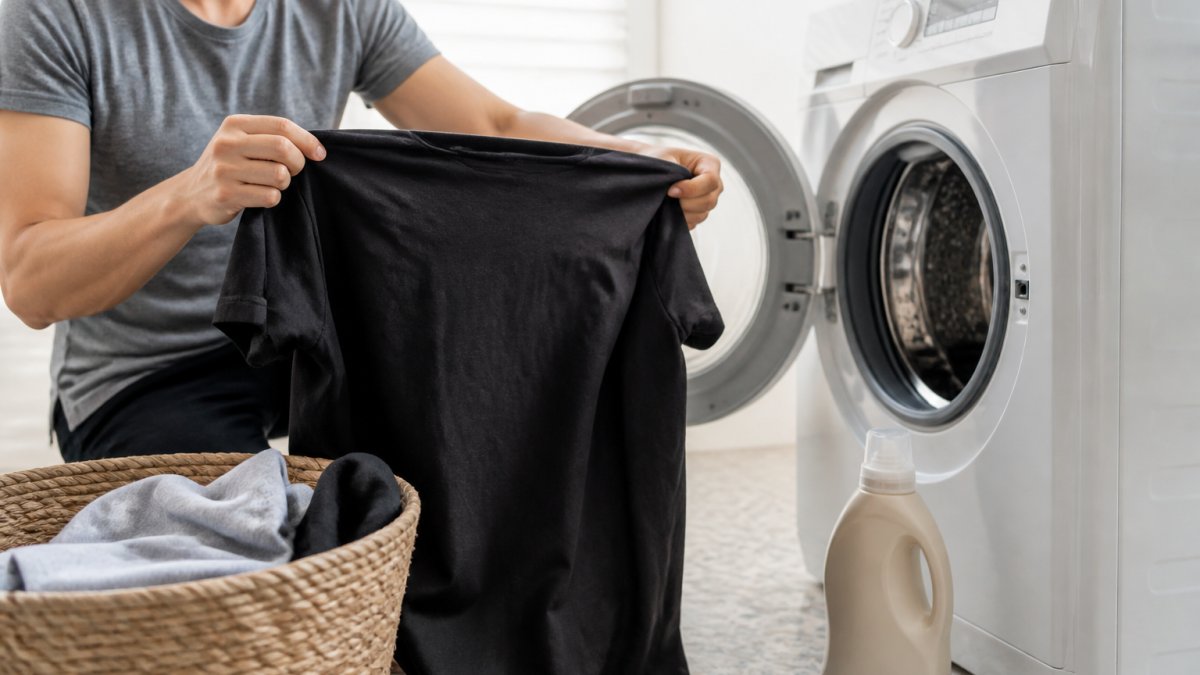
The 5-Step Wash Routine That Protects Every Print
- Turn the shirt inside out. This puts fabric between the print and everything else in the drum.
- Wash with like colors in cold water. Set the machine to cold, every time.
- Use a mild liquid detergent. Powder detergent can leave grit that rubs the print.
- Choose a gentle or delicate cycle. Less agitation means less friction on the design.
- Skip bleach and fabric softener. Both break down print adhesion over time.
Follow this and you have solved most of the problem. The rest comes down to drying.
How to Dry Graphic Tees So the Print Stays Put
Air-drying is the single best thing you can do for a printed shirt. Heat is the number one enemy of print adhesion, and a dryer is pure heat and tumbling.
Hang the shirt inside out on a line or a hanger. Let it dry in the shade, not direct sun, which can fade the colors.
If you must use a dryer, follow these rules:
- Set it to the lowest heat setting available
- Pull the shirt out while it is still slightly damp
- Never leave it in for a full cycle
- Avoid dryer sheets, which leave a coating on the print
How to Fix Peeling Vinyl on a T-Shirt (Method-Specific Repairs)
Before you touch an iron, diagnose the failure. The same lifted edge can come from four very different causes, and the fix changes depending on which one you have.
Diagnose the Cause First
- Heat damage: The print looks glossy, brittle, or cracked across the whole design, not just the edges. This usually means a hot dryer or a hot iron was used directly on the print. Heat-damaged vinyl often cannot be fully re-bonded because the adhesive layer has already degraded.
- Poor adhesion from the start: Edges lift within the first few washes, often on a brand-new shirt. This points to a manufacturing issue, insufficient pressure, wrong temperature, or too short a press time during production. A single re-press with parchment paper often fixes this permanently.
- Age and wash abrasion: The print has slowly worn thin over months or years, with many small lifts rather than one clean edge. This is cumulative friction damage. Re-pressing can buy time, but the bond will keep failing.
- Stretch and stress: Cracks run along the direction the fabric stretches, across the chest, over the shoulders. The ink or film has lost elasticity. Re-pressing helps the edges but will not restore cracked ink.
Method-Specific Repair Steps
Heat-transfer vinyl (HTV):
Power of a Teacher Graphic T-Shirt →
- Turn the shirt inside out or lay it flat with the print facing up.
- Cover the design with parchment paper or a thin cotton pressing cloth. Never let the iron touch the vinyl directly, it will melt and stick to the soleplate.
- Set the iron to its lowest heat setting with steam OFF. Moisture plus heat loosens the adhesive rather than reactivating it.
- Press firmly for 10-15 seconds, moving the iron slowly. Do not scrub back and forth.
- Let it cool completely before peeling back the parchment to check the edges. If edges are still lifting, repeat once. If a second press does not hold, the adhesive is spent, stop.
Screen print: A light press with a protective cloth can re-seat a small lifted edge, but cracked ink cannot be restored. You can slow further cracking by pressing flat, but the crack lines will remain visible. Do not apply direct heat to a screen print, the ink can smear.
Direct-to-garment (DTG): There is no reliable home repair for DTG fading or dulling. The ink is bonded into the fibers, so re-pressing does nothing. Prevention through cold washing and mild detergent is the only real protection.
When NOT to Repair
- If the print is cracked across the design, re-pressing will not hide the cracks.
- If the shirt has been through many hot dryer cycles, the adhesive is likely too degraded to reactivate.
- If the fabric itself is pilling or thinning under the print, the bond has no stable surface to hold onto.
- If you are unsure of the print type, test on a hidden area first, a small interior hem or the inside of the shirt near the bottom.
A Note on Adhesives and Aftermarket Fixes
Fabric glue and spray adhesives are sometimes suggested for peeling prints, but most practitioners find they stiffen the fabric, yellow over time, and fail faster than the original bond. They also make future heat repairs impossible because the glue layer interferes with reactivation. If heat pressing fails, the print is usually beyond saving.
How to Stop T-Shirt Pilling: Fabric Care Beyond the Print
Pilling is the little fuzz balls that form on cotton, and it is a fabric problem, not a print problem. Still, it matters, because pills rub against the print and speed up wear.
The causes are friction and abrasion. Here is how to stop it:
- Wash shirts inside out to reduce surface rubbing
- Use a gentle cycle with fewer items in the drum
- Avoid washing tees with zippers, hooks, or rough fabrics
- Air-dry instead of tumbling, which is the biggest source of friction
A fabric shaver can remove existing pills, but it will not stop new ones. Prevention is the only real fix.
Storage, Wear, and Everyday Habits That Keep Prints Intact
How you store and wear a tee matters as much as how you wash it. Small habits add up over hundreds of wears.
Fold shirts instead of hanging them if the print is stiff. Hanging can stretch the shoulders and stress the design over time. Keep them out of damp spaces and away from direct sun.
In daily wear:
- Put the shirt on and take it off gently, no tugging at the collar
- Avoid spraying perfume or deodorant directly on the print
- Do not iron the design face-up, always use a cloth barrier
- Rotate your tees so no single shirt takes all the wear
If you want a printed garment built to handle this kind of care, our Power of a Teacher Graphic T-Shirt uses 100% Airlume combed and ring-spun cotton with a retail fit and a tear-away label, so it feels good and holds up wash after wash.

Conclusion: Print Care Is Simple Once You Know What Causes Damage
The challenge is not complicated: heat and friction wreck prints, and most people never learn that until a favorite tee is already peeling. Now you know the causes, the wash routine, and the repairs that actually work.
At Gilded & Gritty, we make original graphic tees with premium fabric and long-lasting quality, built for people who want their clothing to say something. Our designs are free from templates and rules, made to match your identity, not a trend cycle.
Get started with Gilded & Gritty and wear a tee that lasts as long as your story does. VIEW ALL
Frequently Asked Questions
How to keep graphic tees from cracking?
Wash printed tees in cold water on a gentle or delicate cycle, turn them inside out first, and use a mild liquid detergent instead of powder or harsh detergent. Skip bleach entirely. When drying, use low heat or air-dry instead of high heat, since heat exposure is the main cause of print cracking and fading. These habits protect print adhesion and keep the graphic flexible through repeated laundering.
Can you put graphic tees in the dryer?
You can, but keep it short and on low heat. High heat weakens the bond between the print and the fabric, which leads to cracking, peeling, and flaking over time. If you use a tumble dry cycle, remove the shirt while it is still slightly damp and hang it to finish drying. Air-drying or hang drying is the safest option for any printed garment.
Does turning a graphic tee inside out prevent the print from peeling?
It helps significantly. Turning the shirt inside out reduces friction between the print and other garments during the wash cycle, which is one of the main causes of peeling and flaking. Pair it with a cold, gentle cycle and mild detergent for the best protection. Fabric wear and friction are cumulative, so every wash you protect the print matters.
How do you fix a shirt that's already peeling?
For small lifted edges, place parchment paper over the design and press with a warm iron (no steam) or a heat press for 10-15 seconds, then let it cool before peeling the paper back. If the print is cracking, repair options are limited, so prevention matters more. If the shirt is a favorite, a protective cloth and low-heat press can slow further damage.


