
Table of Contents
- How to Spot Dropshipped Clothing Brands: A 7-Step Verification Workflow
- Signs of a Dropshipping Clothing Brand: 8 Indicators That Matter
- How to Check If Clothing Designs Are Original (Not Generic Templates)
- Reverse Image Search Clothing Products: A Step-by-Step Method
- Clothing Brand Shipping and Return Policy: What to Look For
- Clothing-Specific Clues: Fabric Quality, Sizing Charts, and Apparel Trends
- False Positives and Confidence Levels: When a Store Looks Dropshipped But Isn't
- Frequently Asked Questions
Last Updated: October 14, 2026
How to Spot Dropshipped Clothing Brands: A 7-Step Verification Workflow
A store can look polished, run professional ads, and still be reselling the same generic tee you'll find on five other sites. The product photos give it away.
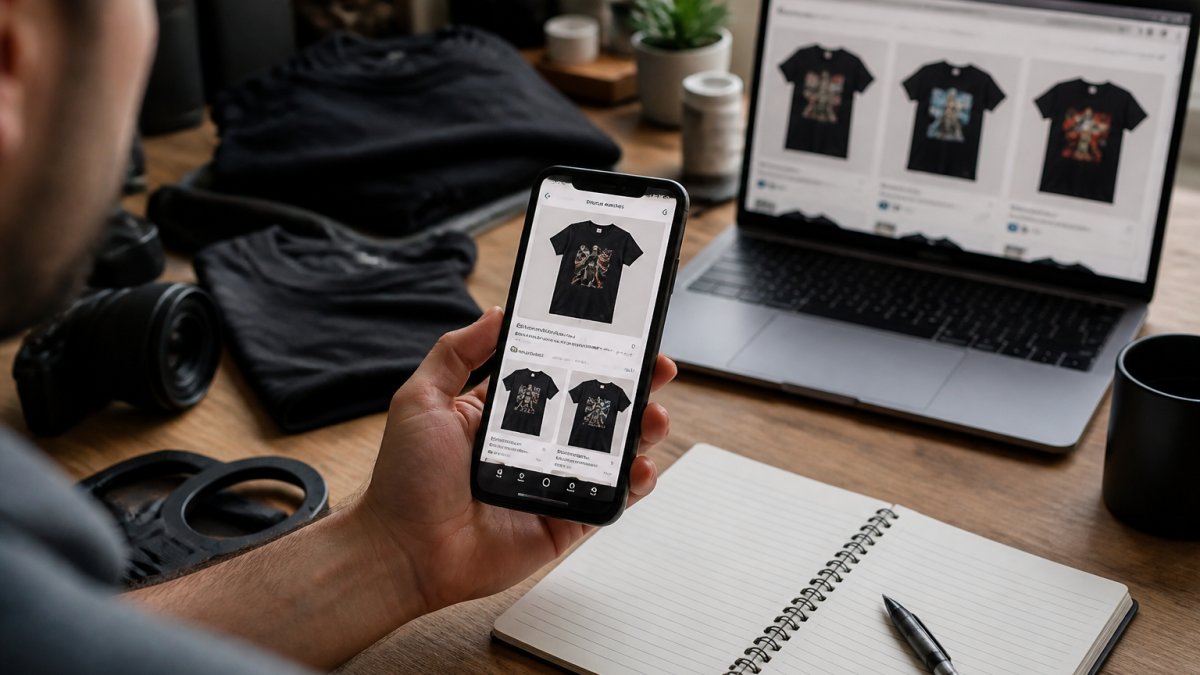
The 7-step workflow below works for any store, in order.
- Reverse image search the main product photo
- Check the catalog for duplicate or near-identical listings
- Compare prices across three or more stores
- Read the shipping and delivery estimates
- Check the return and refund policy
- Look for a real business address and contact details
- Scan reviews for complaints about quality or delays
A dropshipped clothing brand lists apparel it does not make, stock, or ship itself. The supplier handles production and fulfillment; the storefront is the middleman.
Run a Reverse Image Search on Every Product Photo
Reverse image search is the fastest test. Save the product photo, upload it to Google Lens, and see where else it appears. If the same image shows up on dozens of unrelated storefronts, the design is almost certainly a stock template. Do this for at least two products; some stores mix original pieces with generic filler.
Check the Product Catalog for Duplicate Listings
A real clothing brand has a point of view. A dropship store has a spreadsheet.
Look for these catalog red flags:
- The same design on shirts, mugs, posters, and phone cases
- Wildly different styles in one collection (anime, politics, fitness, pets)
- Product titles that read like keyword lists, not brand names
If the catalog looks like it was assembled by an algorithm, it probably was.
Signs of a Dropshipping Clothing Brand: 8 Indicators That Matter
Eight signals separate a dropship storefront from a genuine label. No single sign proves anything alone, but two or three together tell a clear story. Weigh each by how hard it is to fake.
- Product photos appear on multiple unrelated sites, This is the strongest single signal. Use reverse image search on at least two garments. If the same photo shows up under different brand names, the store is almost certainly reselling a generic item.
- Prices sit far below what original design work would allow, A plain tee with a trending slogan priced at $12-$18 is a red flag when original graphic tees typically retail for $25-$40 to cover design, printing, and overhead. Compare the same item across three stores; wide price swings on identical photos indicate resellers.
- Shipping estimates run long and vague, Phrases like "ships in 7-20 business days" or "delivery within 2-4 weeks" point to overseas fulfillment. Real apparel brands usually know their stock and ship within 1-3 business days.
- The return policy is buried or restrictive, Look for return windows shorter than 14 days, restocking fees, or a requirement to ship returns to an overseas address. A physical return address in the same country as the store is a positive sign.
- Contact info is a form with no address, Legitimate brands list a business address, phone number, or live chat. A contact page with only a web form and no physical location is a common dropship pattern.
- Reviews mention long waits or wrong items, Scan reviews for repeated complaints about delivery times, sizing inaccuracies, or items arriving that don't match the photos. A few negative reviews are normal; a pattern of fulfillment complaints is not.
- The "about" page tells no real story, Genuine clothing brands share their founding story, design philosophy, and often the faces behind the label. Dropship stores often have a generic about page with stock photos and vague mission statements.
- New designs appear and vanish within weeks, Dropship stores often test trending designs and drop them quickly if they don't sell. A real brand maintains a consistent collection and restocks core pieces.
Pricing and Markup Clues
A steep markup on a generic item is the classic dropship tell. If a plain tee with a trending slogan costs far less elsewhere and ships from the same warehouse, you are paying for a storefront, not a design. When photos match across three stores but prices swing widely, you are looking at resellers. If the price is less than half of a comparable original design, treat it as a strong signal, but verify with image search first.
Shipping Times and Fulfillment Patterns
Long, vague delivery windows point to overseas fulfillment. Watch for phrases like "ships in 7-20 business days" or estimates that change after checkout. Real apparel brands know their stock; dropship stores don't, because they never hold it. A common pattern: a shipping page promising "fast delivery" but a checkout estimate adding 10-15 business days.
| Indicator | What It Looks Like | Risk Level |
|---|---|---|
| Reverse image match | Same photo on 5+ stores | High |
| Long shipping window | 15-30 business days | Medium |
| No return address | Form-only contact | High |
| Generic catalog | Mixed unrelated themes | Medium |
| Price swings | Same item, big gaps | Medium |
| No fabric details | "Cotton blend" with no weight or origin | High |
| Copy-pasted sizing chart | Identical chart on unrelated stores | High |
| Only S-XL sizing | No extended sizes offered | Medium |
How to Interpret These Signs Without Jumping to Conclusions
No single indicator is proof. A long shipping window alone could mean made-to-order production; a low price alone could be a clearance sale. The strongest cases combine at least three hard-to-fake signals: duplicate product photos, no physical address, and vague or restrictive return terms. One weak signal is a prompt to investigate further, not a verdict.
How to Check If Clothing Designs Are Original (Not Generic Templates)
Original designs leave evidence; generic templates leave duplicates. To check if clothing designs are original, look for a named artist, a design story, and a consistent visual style.
Ask three questions:
- Does the brand credit its designers?
- Do the designs share a recognizable style?
- Does the same artwork appear on other stores?
At Gilded & Gritty, every graphic tee starts as an original design, not a marketplace template.
Reverse Image Search Clothing Products: A Step-by-Step Method
Reverse image search clothing products in five steps. This works on phone or desktop and takes about two minutes per item.
- Long-press or right-click the product photo and save it
- Open Google Lens or your preferred reverse image tool
- Upload the saved image
- Scan the results for matching listings on other stores
- Note whether the same photo appears with different brand names
If the same image appears under three or more brand names, treat the listing as generic. For more on how image search works, see Google's guide to searching with an image.
Clothing Brand Shipping and Return Policy: What to Look For
A clothing brand shipping and return policy reveals how much the store actually controls. Brands holding their own stock offer clear windows and easy returns; dropship stores hide behind vague terms.
Check these three things:
- Return window: Real brands usually offer at least 14-30 days
- Return address: A physical address signals a real operation
- Restocking fees: Unexpected fees often mean the store can't absorb returns
Under consumer protection rules in many markets, you have rights when a product arrives late, damaged, or not as described. The FTC's guidance on online shopping rights explains what sellers must disclose.
Clothing-Specific Clues: Fabric Quality, Sizing Charts, and Apparel Trends
Apparel has tells other product categories don't. Fabric quality, sizing accuracy, and trend behavior all leave fingerprints. Here's what to examine before you buy.
Fabric and Construction Details
A real clothing brand describes fabric with specificity: fiber content (e.g., "100% combed ring-spun cotton"), weight (e.g., "180 GSM"), and sometimes the mill or origin. Dropship listings use vague terms like "premium cotton blend" with no numbers. Look for:
- No fabric weight or origin, If the product page doesn't state the fabric weight or where it's made, that's a gap. Legitimate brands usually include this because it's a selling point.
- Generic care labels, Dropshipped garments often have a single, generic care label with no brand name or a brand name that doesn't match the store. Check customer photos in reviews to see the actual label.
- Construction shortcuts, Look for uneven stitching, loose threads, or misaligned prints in customer photos. These are common in low-cost dropshipped apparel.
Sizing Charts and Fit Consistency
Copy-pasted sizing charts are a major tell. If the same chart appears on multiple unrelated stores, or uses generic measurements that don't match the brand's stated fit, that's a red flag. A real brand's chart reflects its own patterns; dropship stores pull one supplier chart and apply it to everything, which leads to inconsistent fit.
Check for:
- Identical charts across stores, Search a distinctive phrase from the chart (e.g., "chest width 20 inches") to see if it appears elsewhere.
- No size range depth, Many dropship stores offer only S-XL, while real brands often extend to XS-3XL or offer tall/petite options.
- Inconsistent measurements, Compare the chart to customer reviews mentioning fit. If multiple reviewers say "runs small" or "runs large," the chart may be inaccurate.
Photography and Catalog Patterns
Dropshipped clothing often uses the same catalog photography across many stores. Watch for:
- Repeated model shots, The same model in the same pose appearing on different sites.
- Flat-lay or mockup images, While some brands use mockups, a catalog made entirely of mockups with no real-life photos is a clue.
- No detail shots, Real brands show close-ups of fabric, stitching, and labels. Dropship listings often show only the front of the garment.
Trend Chasing and Design Originality
Dropship stores chase viral trends, listing the exact design seen on TikTok or Instagram within days. A real brand may follow trends but adds its own twist and keeps a consistent aesthetic.
If the artwork appears elsewhere, it's likely a generic template. If the brand has a clear point of view and original artwork, it's more likely a legitimate label, even if it uses print-on-demand fulfillment.
What You Can Learn from a Sample Order
If you're still unsure, a small test order reveals a lot. Order one item and evaluate:
- Packaging, Branded packaging or a generic poly mailer?
- Care label, Brand-specific or generic?
- Fabric feel, Does it match the description (weight, softness, stretch)?
What a sample order cannot tell you: whether the store designs its own products or whether it will consistently fulfill future orders. But it gives you concrete evidence to combine with the digital clues above.
False Positives and Confidence Levels: When a Store Looks Dropshipped But Isn't
Not every store that looks dropshipped actually is. Most guides treat every red flag as proof, which leads to false accusations against legitimate small brands.
Three models get mistaken for dropshipping:
- Private label: The brand designs the product and contracts a manufacturer to produce it. The brand owns the design. This is not dropshipping.
- Made-to-order: The brand prints or produces items after you order, often in-house. Slow shipping is normal here, not a red flag.
- Print-on-demand: The brand uploads original art to a production partner. The fulfillment is outsourced, but the design is theirs.
So how do you tell the difference? Look at the design.
Rate your confidence:
- High confidence: 3+ strong signals (duplicate photos, no address, vague shipping)
- Medium confidence: 1-2 signals, mixed evidence
- Low confidence: Only one weak signal, like a long shipping window
When confidence is low, don't write the store off. Ask them directly. A real brand will answer questions about where its clothing is made.
Frequently Asked Questions
How can you tell if a clothing brand is dropshipping?
Check for duplicate product photos across multiple websites using reverse image search, unusually long shipping estimates, and a lack of original sizing charts. Dropshipped clothing brands often use the same supplier images and have generic product descriptions. A store that cannot provide fabric details, care instructions, or a business address is likely dropshipping.
Can reverse image search help identify dropshipped clothing?
Yes. Upload the product photo to Google Lens or TinEye. If the same image appears on dozens of unrelated stores, the brand is likely reselling a supplier image. Reverse image search clothing products is one of the fastest ways to confirm whether a design is original or sourced from a wholesaler marketplace.
Does a long shipping time mean a clothing brand is dropshipping?
Not always, but it is a strong indicator. Dropshipped clothing often ships from overseas suppliers with delivery estimates of 2-4 weeks. However, some made-to-order or small-batch brands also have longer lead times. Check whether the brand provides tracking information and a clear fulfillment timeline before assuming dropshipping.
Is dropshipping always a sign that a clothing brand is low quality?
No. Some dropshipping stores sell decent products, but the model often means less control over fabric quality, sizing consistency, and customer service. The bigger risk is paying a markup for a generic item you could find elsewhere. Look for brands that share fabric details, offer clear return policies, and show original designs.
The difference between a real label and a reseller comes down to one thing: who made the design. Gilded & Gritty builds original graphic tees with premium fabric, no templates, and designs made for people who want their clothing to say something. Every piece is made to last, fit right, and reflect who you are. Skip the guesswork and shop designs that are actually ours. View Gilded & Gritty's original graphic tees


